Two years ago, putting "eco-friendly" on your packaging was enough to check the sustainability box. That's over. In 2026, consumers, retailers, and regulators are all asking the same question: prove it.
The EU Packaging and Packaging Waste Regulation (PPWR) now requires all packaging to be recyclable or compostable, restricts hazardous substances, and mandates minimum recycled content thresholds. In the US, Extended Producer Responsibility laws are active or pending in over a dozen states. Retailers are requiring sustainability documentation before they'll even list your product. And over 70 percent of consumers say they're willing to pay more for packaging that's genuinely sustainable, not just labeled that way.
If your brand sells physical products and your packaging strategy still relies on vague claims like "earth-friendly" or "green materials," you're exposed. This guide covers what sustainable packaging actually means in 2026, which materials qualify, what certifications matter, and how to make the switch without blowing your budget. If you already use kraft packaging, you may be closer than you think.
What Counts as Sustainable Packaging in 2026?
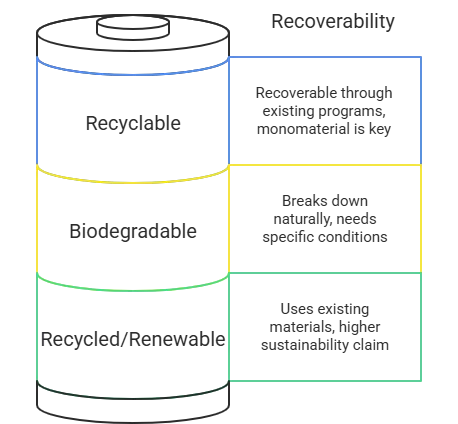
The definition has tightened. Sustainable packaging in 2026 means materials that can realistically reenter a material cycle after use. Not theoretically recyclable. Not recyclable "where facilities exist." Actually recoverable through existing curbside programs or industrial composting infrastructure.
Three categories qualify:
Recyclable packaging:
This includes corrugated fiberboard, kraft paperboard, SBS cardboard, and most paper-based materials. Corrugated has the strongest case here. Its recovery rate in the US sits above 90 percent, making it the most recycled packaging material in the country. The key is keeping it monomaterial. Once you laminate corrugated with plastic film or add non-separable coatings, recyclability drops.
Biodegradable packaging:
Materials that break down naturally through microbial activity. Unbleached kraft paper, molded pulp inserts, and certain water-based coated boards fall into this category. Important distinction: biodegradable is not the same as compostable. Compostable materials need specific conditions (temperature, moisture, microbes) to decompose, often only available in industrial composting facilities. If your customer doesn't have access to one, a "compostable" label is misleading.
Packaging made from recycled or renewable content:
Recycled corrugated board, post-consumer waste (PCW) paperboard, and FSC certified virgin fiber all qualify. The higher the recycled content percentage, the stronger the sustainability claim. Brands that can state "made from 80% recycled corrugated" carry more weight than those that say "made from recyclable materials."
Why Vague Eco Claims Are Now a Liability
Greenwashing used to be a PR problem. In 2026 it's a regulatory and legal risk. The EU's proposed Green Claims Directive requires brands to back every environmental statement with verifiable evidence. In the US, the FTC's Green Guides are under review for the first time in over a decade, and state attorneys general are actively pursuing misleading sustainability claims.
Words like "eco-friendly," "green," "natural," and "sustainable" without qualification are exactly the kind of language regulators are targeting. A skincare brand that prints "eco-friendly packaging" on a box that's laminated with plastic film and uses petroleum-based ink is making a claim it can't substantiate.
- The fix isn't complicated. Replace vague language with specific, measurable statements:
- Instead of "eco-friendly box," say "made from 100% recyclable corrugated board."
- Instead of "sustainable materials," say "printed with soy-based inks on FSC certified kraft paperboard."
- Instead of "green packaging," say "this box is curbside recyclable in all 50 states."
Specificity protects you legally. It also builds trust with buyers who've grown skeptical of broad environmental claims.
Which Packaging Materials Are Actually Eco-Friendly?
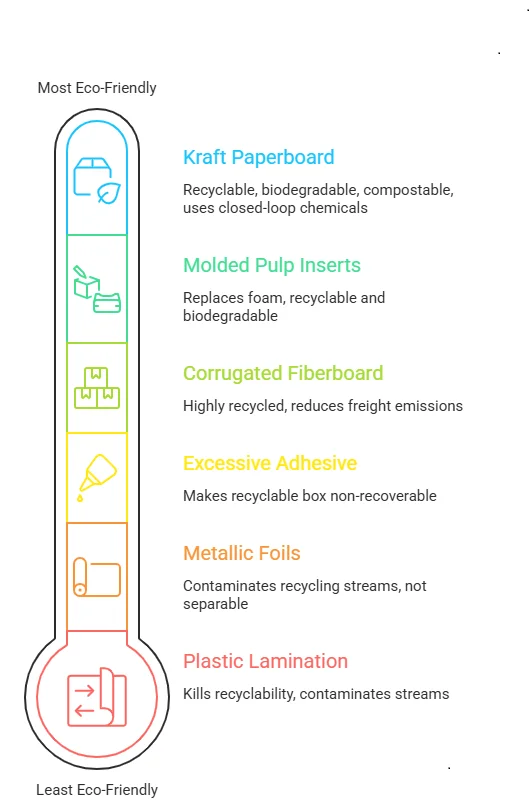
Not every material marketed as green lives up to the label. Here's what holds up under scrutiny.
Kraft paperboard
Unbleached kraft is one of the strongest sustainability picks. It's made from virgin wood fiber processed through the kraft pulping method, which recovers and reuses cooking chemicals in a closed loop. The result is a strong, naturally brown board that's fully recyclable, biodegradable, and compostable. Pair it with soy-based inks and water-based coatings and you've got one of the cleanest packaging setups available. Organic skincare lines, artisan coffee roasters, handmade soap brands, and small-batch food producers use kraft for exactly this reason. It communicates sustainability visually before the customer reads a single word.
Corrugated fiberboard:
Already the most recycled packaging material in the US. Most corrugated board contains 25 to 50 percent recycled content by default, and high-PCW options push that above 70 percent. It ships flat, which reduces freight emissions. It protects products during transit, which prevents returns and the waste that comes with them. For e-commerce brands, DTC subscription companies, and food delivery businesses, corrugated is the sustainability workhorse.
Molded pulp inserts:
These replace expanded polystyrene (EPS) foam and plastic inserts inside boxes. Made from recycled paper fiber, they're fully recyclable and biodegradable. They cushion fragile products like candles, glass bottles, cosmetics, and electronics without adding non-recyclable material to the package.
What to avoid:
Plastic lamination on paper boxes kills recyclability. Metallic foils that aren't separable from the board create contamination in recycling streams. Excessive adhesive from non-water-based glue systems can make an otherwise recyclable box non-recoverable. If your packaging has these elements, it's not sustainable regardless of what the label says.
Certifications That Actually Matter
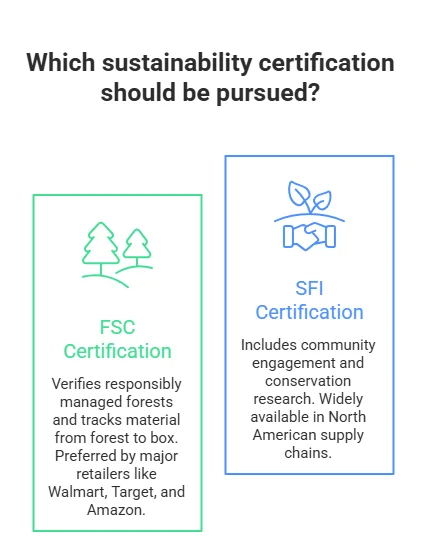
Two certifications carry real weight with retailers, regulators, and informed consumers:
FSC (Forest Stewardship Council):
Verifies that the paper or board in your packaging comes from responsibly managed forests. FSC Chain of Custody certification tracks the material from forest to finished box. Major retailers including Walmart, Target, and Amazon increasingly require or prefer FSC certified packaging from their suppliers.
SFI (Sustainable Forestry Initiative):
Similar to FSC but with a broader scope that includes community engagement and conservation research. SFI certified fiber is widely available in North American paper and board supply chains. Either certification gives your brand a defensible, third-party verified sustainability claim.
Printing "FSC Certified" or "SFI Certified" on your packaging with the official mark is one of the most credible things you can do. It's not a self-declared claim. It's independently audited.
How to Switch Without Breaking the Budget
The assumption that sustainable packaging costs significantly more is outdated. In many cases, the switch saves money.
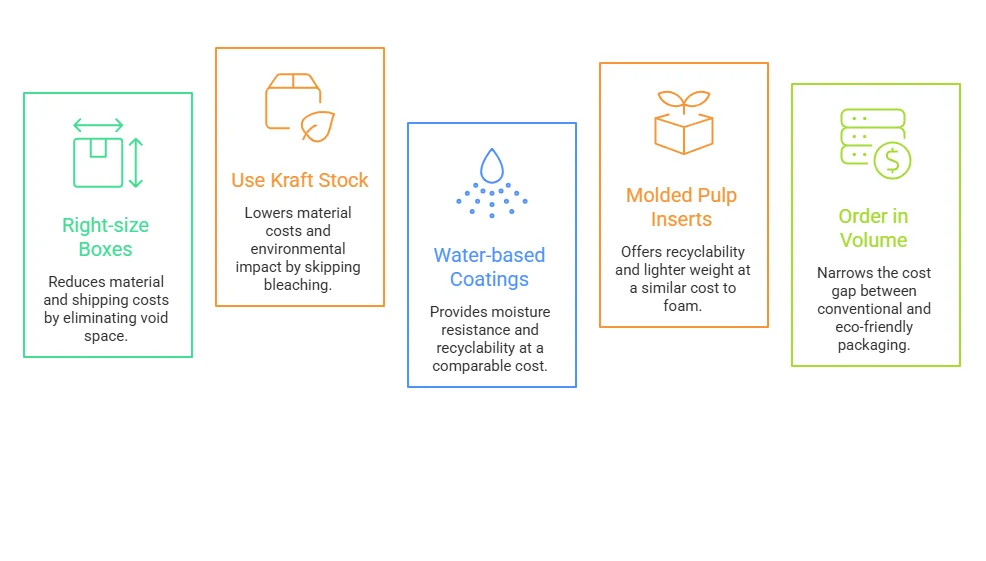
Right-size your boxes:
Smaller boxes use less board, less ink, and cost less to ship. A box that fits the product with minimal void space eliminates the need for plastic fillers or crinkle paper. This is the single cheapest sustainability win available.
Switch to kraft from bleached white stock:
Unbleached kraft skips the bleaching process entirely, which reduces the material cost by 10 to 20 percent compared to white SBS. It also eliminates the chemicals involved in bleaching, which strengthens your environmental positioning.
Use water-based coatings instead of plastic lamination:
They provide moisture resistance, accept printing well, and keep the box fully recyclable. The per-unit cost is comparable to standard lamination.
Replace foam inserts with molded pulp:
At scale, molded pulp costs about the same as EPS foam. It's lighter, which reduces shipping weight, and it's fully recyclable, which simplifies the end-of-life story for your packaging.
Order in volume:
Sustainable materials don't carry a meaningful premium at wholesale quantities. The cost gap between conventional and eco-friendly packaging narrows significantly above 500 units and virtually disappears above 2,000.
Make Your Packaging Work for the Planet and Your Brand
Sustainable packaging in 2026 isn't a marketing angle. It's a baseline expectation from customers, a compliance requirement from regulators, and a listing condition from major retailers. Brands that get ahead of this now build trust, avoid regulatory exposure, and position themselves where the market is heading.
At Packings.co, every box we produce uses recyclable materials. We offer kraft, corrugated, and cardboard in all custom sizes with soy-based ink printing and water-based coatings. No plastic lamination required unless you specifically request it. FSC certified stock is available on request.
Get the packaging that fits your brand and budget:
Request a free, no-obligation quote today. We'll respond within 24 hours with material recommendations, pricing, and a digital proof.
FAQs
Q: Is kraft packaging really sustainable?
Yes. Unbleached kraft is recyclable, biodegradable, and compostable. It uses fewer chemicals than bleached alternatives and pairs well with soy-based inks and water-based coatings for a fully green packaging setup.
Q: What certifications should I look for on packaging?
FSC and SFI are the two most credible. Both are independently audited and verify that the fiber in your packaging comes from responsibly managed forests. Major retailers increasingly require one or both.
Q: Does sustainable packaging cost more?
Not always. Right-sizing boxes, switching from bleached to unbleached kraft, and replacing foam inserts with molded pulp can actually reduce your per-unit cost. At wholesale volumes above 500 units the price gap is minimal.
Q: What makes packaging non-recyclable?
Plastic lamination, metallic foils bonded to paper, non-water-based adhesives, and multi-material structures that can't be separated. If the materials can't be sorted at a standard recycling facility, the box ends up in landfill regardless of what's printed on it.
Q: Can I print full color on eco-friendly packaging?
Yes. Digital and offset printing with soy-based inks deliver full CMYK color on kraft and corrugated. The natural brown surface affects color appearance, so dark inks and white ink on brown kraft tend to look sharpest. For vibrant full bleed color, white recycled SBS is available.
Q: How does order volume affect sustainable packaging cost?
Setup costs like die cutting and plate creation are fixed. At 200 units each box carries a large share of that overhead. At 1,000+ units the per-unit cost drops significantly. Sustainable materials carry almost no price premium at wholesale volumes.